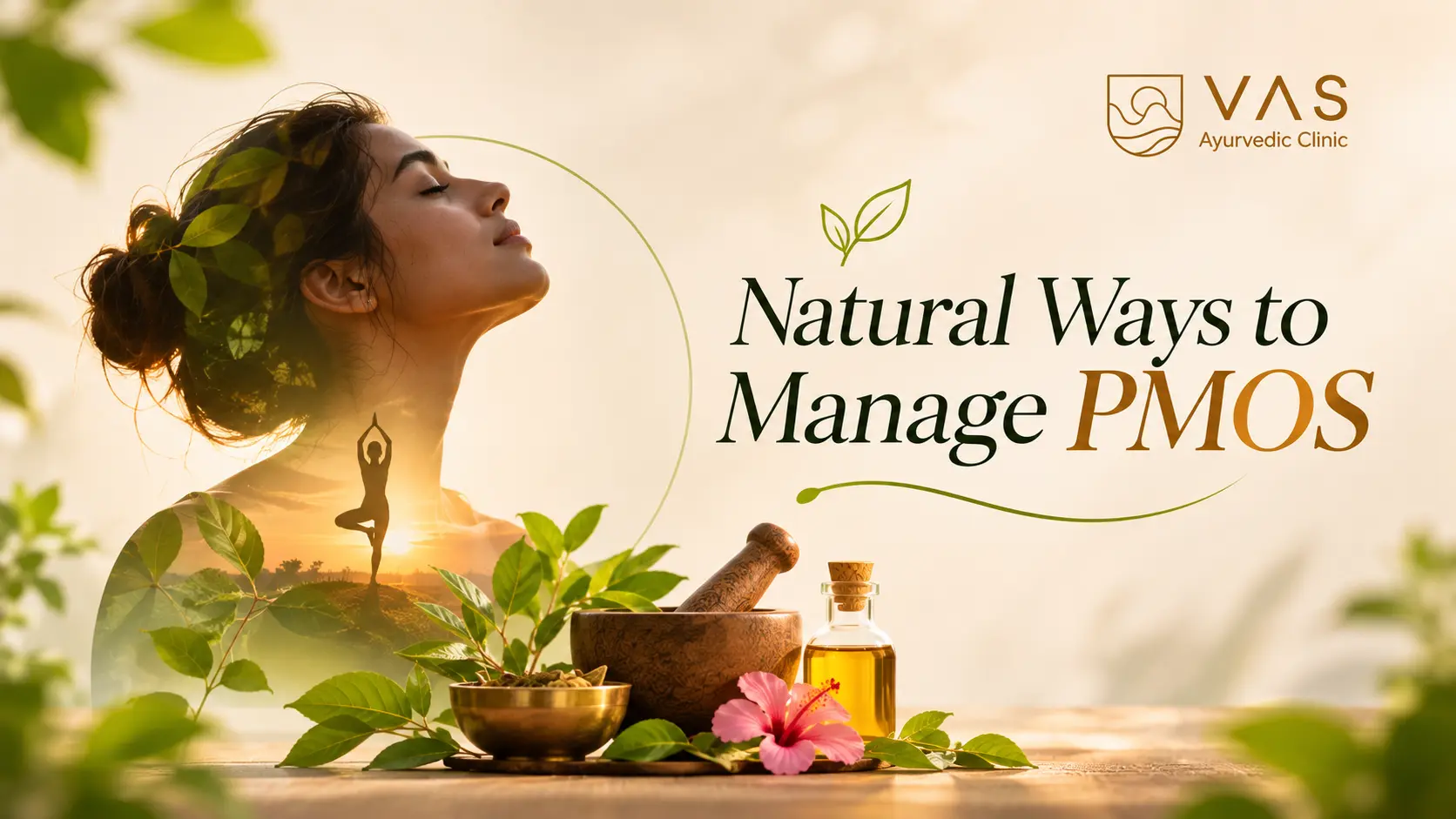
Hormonal health plays an important role in a woman’s overall well-being. Natural ways to manage PMOS can help women support their hormonal and metabolic health through balanced nutrition, regular exercise, adequate sleep and healthy lifestyle habits.
Polyendocrine Metabolic Ovarian Syndrome (PMOS), previously known as Polycystic Ovary Syndrome (PCOS), is a complex hormonal and metabolic condition that can affect menstrual cycles, skin health, weight and reproductive health.
Although there is no guaranteed natural cure for PMOS, certain lifestyle changes can help manage symptoms and support overall well-being. Ayurveda also offers traditional approaches to women’s wellness through personalised dietary guidance, lifestyle practices and physician-supervised therapies.
In this guide, we explore natural ways to manage PMOS, including dietary changes, daily habits and Ayurvedic approaches that may complement conventional medical care.
Polyendocrine Metabolic Ovarian Syndrome (PMOS) is the new name for the condition previously known as Polycystic Ovary Syndrome (PCOS).
The name was updated in May 2026 following an international consensus process involving medical professionals, researchers and patient organisations.
The earlier name placed considerable emphasis on ovarian cysts, even though the condition involves much broader hormonal, metabolic and reproductive health concerns. The new terminology better reflects its complex nature.
PMOS can affect hormone levels, insulin sensitivity, menstrual cycles, skin, weight and reproductive health.
One factor commonly associated with PMOS is insulin resistance. When the body’s cells do not respond effectively to insulin, the body may produce more of it. Higher insulin levels can contribute to increased androgen production, which may affect ovulation and menstrual regularity.
Every woman’s experience is different, making proper medical assessment important for understanding the condition.
The symptoms of PMOS can vary from one woman to another. Some may experience noticeable menstrual changes, while others may first observe changes in their skin, hair or weight.
Common symptoms include:
Not every woman experiences all these symptoms. If you notice persistent changes in your menstrual cycle or other concerning symptoms, consult a qualified healthcare professional.
Managing PMOS does not mean making drastic changes to your daily routine. Small, consistent improvements in eating habits, physical activity and sleep can contribute to better overall health.
Here are seven practical approaches to consider.

Food choices play an important role in managing PMOS, particularly for women experiencing insulin resistance.
A balanced PMOS diet should include foods that provide fibre, protein, vitamins and healthy fats. Instead of following restrictive eating plans, focus on making healthier everyday choices.
Consider including:
It is also helpful to reduce frequent consumption of sugary drinks, refined carbohydrates and highly processed foods.
There is no single food that can cure PMOS. A sustainable eating pattern based on individual nutritional needs is more beneficial than restrictive dieting.

Regular physical activity is an important part of managing PMOS naturally.
Exercise can improve insulin sensitivity, support cardiovascular health and contribute to overall metabolic well-being.
You do not need to spend hours at the gym. Simple activities can become part of your everyday routine.
Try incorporating:
Choose activities that suit your fitness level and make them a regular habit. Consistency matters more than workout intensity.

Sleep is often overlooked when discussing hormonal health. However, inadequate sleep can affect insulin sensitivity, appetite regulation and overall well-being.
Women managing PMOS should aim for approximately 7–9 hours of sleep each night.
A few simple habits can help improve sleep quality:
Good sleep habits may not directly treat PMOS, but they support the body’s metabolic and hormonal functions.

Stress is a normal part of life, but prolonged stress can affect sleep, eating patterns and emotional health.
For women dealing with PMOS, making time for relaxation can be an important part of a healthier lifestyle.
Some activities worth trying include:
These practices can support emotional well-being and make it easier to maintain healthy daily habits.

Weight changes are commonly discussed in relation to PMOS, but it is important to understand that not every woman with the condition is overweight.
For women who have excess weight, gradual weight management may improve insulin sensitivity and menstrual regularity.
Avoid crash diets, skipping meals or excessive exercise. These approaches can be difficult to maintain and may affect nutritional health.
Instead, focus on balanced meals, regular movement and habits that support long-term health.

Keeping track of your menstrual cycle can help you understand changes in your reproductive health.
Note the following details:
Sharing this information with your doctor can help identify patterns and support a more accurate assessment.
Ayurveda takes a holistic approach to health by considering an individual’s constitution, digestion, lifestyle and overall well-being.
In traditional Ayurvedic understanding, menstrual and reproductive health is associated with concepts such as Doshas, Agni (digestive and metabolic function) and Artava (menstrual and reproductive health).
Rather than following the same recommendations for everyone, an Ayurvedic physician assesses individual health needs before suggesting suitable approaches.
Depending on the consultation, Ayurvedic care may include:
Personalised dietary guidance
Food recommendations may be tailored to individual digestion, daily routines and nutritional needs.
Lifestyle modifications
Regular meal timings, physical activity, adequate rest and consistent daily routines may be encouraged.
Yoga and relaxation
Gentle yoga, breathing exercises and relaxation practices can support physical activity and emotional well-being.
Traditional Ayurvedic therapies
Certain therapies, including Panchakarma procedures, may be considered by a qualified physician after assessing their suitability for the individual.
It is important to understand that scientific evidence supporting Ayurveda as a specific treatment for PMOS remains limited. Ayurvedic care should complement, rather than replace, appropriate gynaecological assessment and treatment.
When exploring Ayurvedic treatment for PMOS, remember that every woman’s health requirements are different.
Factors such as menstrual history, existing symptoms, nutritional status, medical history and current medications should be considered before recommending any treatment.
An Ayurvedic Doctor in Dubai can assess your individual wellness needs and explain which traditional approaches may be appropriate.
If you are searching for an Ayurvedic Clinic in Dubai, look for professional guidance, personalised consultations and transparent recommendations.
At VAS Ayurvedic Clinic, the focus is on understanding individual health concerns and exploring suitable Ayurvedic wellness approaches under professional guidance.
Women considering PMOS treatment in Dubai should also maintain regular consultations with their gynaecologist. Combining appropriate medical care with responsible lifestyle and complementary wellness practices can help support long-term health.
PMOS stands for Polyendocrine Metabolic Ovarian Syndrome. It is the new name introduced in May 2026 for the condition previously known as Polycystic Ovary Syndrome (PCOS). The updated terminology better reflects the hormonal, metabolic and reproductive aspects of the condition.
Some helpful approaches include eating balanced meals, exercising regularly, maintaining a healthy sleep routine, managing stress and following professional medical advice. These habits can support metabolic health and help manage certain symptoms.
Lifestyle changes can improve certain aspects of PMOS, particularly metabolic health. However, some women require medication to manage irregular periods, androgen-related symptoms or fertility concerns. Treatment should be based on individual medical needs.
A balanced diet can include whole grains, vegetables, legumes, nuts, seeds, whole fruits and protein-rich foods. Reducing sugary drinks and frequently consumed highly processed foods may also be helpful.
Ayurveda offers traditional approaches involving personalised dietary recommendations, lifestyle practices and physician-prescribed therapies. However, scientific evidence proving that Ayurvedic treatments can cure PMOS is limited. Ayurvedic care should be considered complementary to appropriate medical treatment.
Yoga can support physical activity, flexibility and stress management. It may contribute to overall well-being, although it should not be considered a standalone treatment for hormonal disorders.
Yes. Many women with PMOS can conceive naturally or with medical assistance. However, irregular ovulation may make conception more challenging for some women. A gynaecologist can recommend appropriate fertility assessment and treatment.
You can consult a qualified Ayurvedic physician if you are interested in complementary Ayurvedic care. Share your diagnosis, medical history and existing prescriptions during the consultation to ensure that any recommended approach is appropriate.
Managing PMOS is a gradual process that requires patience, consistency and the right professional guidance. There is no single food, exercise or natural remedy that works for every woman.
A balanced PMOS diet, regular physical activity, sufficient sleep and stress management can all contribute to better overall health. Ayurveda may provide additional traditional wellness approaches when guided by a qualified physician and used alongside appropriate medical care.
If you are exploring Ayurvedic treatment in Dubai, VAS Ayurvedic Clinic encourages an individualised approach to women’s wellness, helping women make informed decisions about their health and long-term well-being.

BAMS, PGDND